Your Website Gets Traffic but No Calls? How to Diagnose the Leak Before You Spend More on Marketing
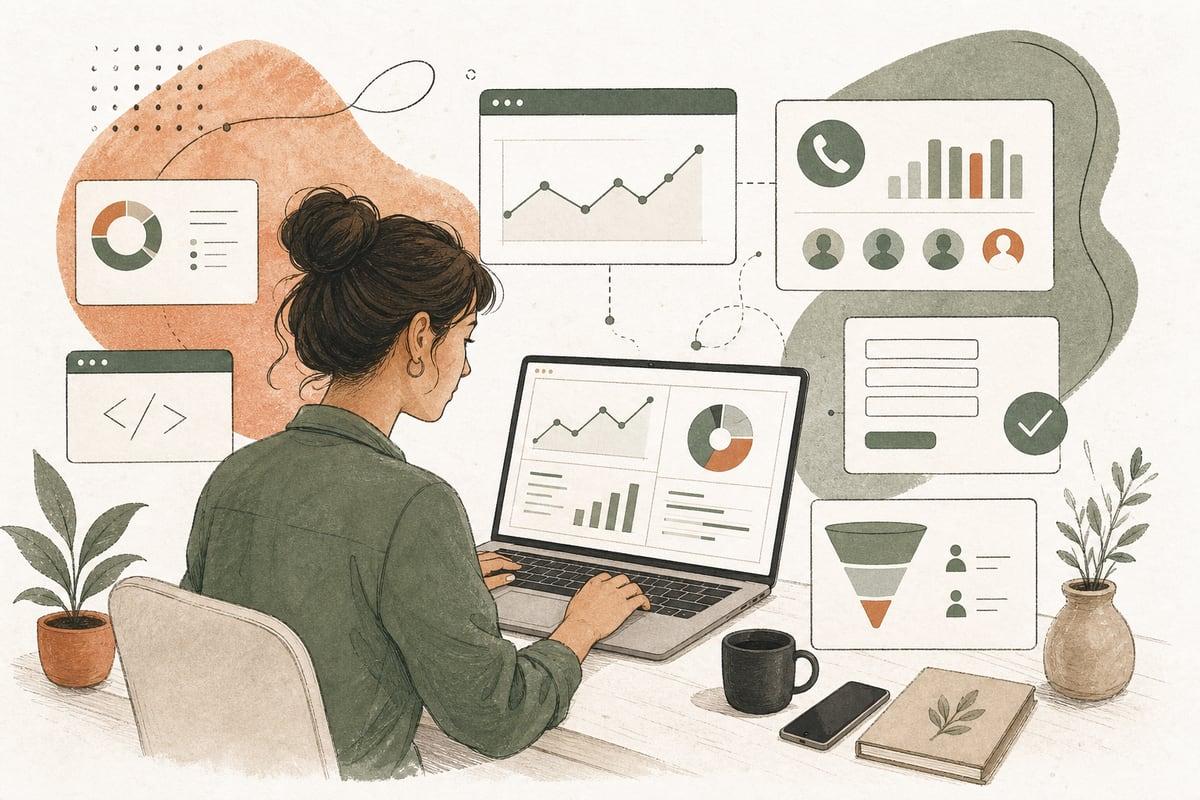
If your website is getting visitors but not turning them into calls, form submissions, or booked appointments, the issue is usually a conversion leak—not just a traffic problem. Before you spend more on ads, SEO, or social media, fix the parts of your website and follow-up process that are quietly losing ready-to-buy customers.
Why traffic alone will not solve this
A lot of business owners assume the answer is simple: “We need more visitors.” Sometimes that is true. But often, a website already has enough traffic to produce more leads if the site makes it easy to trust the business, understand the offer, and take the next step.
If 500 people visit your site and almost nobody contacts you, buying more traffic may just send more people into the same broken system.
Common examples:
- Your homepage is vague and does not clearly say what you do
- Your phone number is hard to find on mobile
- Your contact form is too long or broken
- Your service pages do not answer the questions buyers actually have
- Visitors are ready to reach out, but nobody responds quickly
- Your calls and forms are not being tracked, so you cannot see what is failing
The good news: these problems are usually fixable without a full redesign.
The 7 most common conversion leaks on small-business websites
Here are the first places to look if your website feels busy but your pipeline feels quiet.
1. Your message is clear to you, but not to the customer
Many small-business websites talk in general terms like:
- “Trusted solutions”
- “Quality service”
- “Full-service company”
- “We care about our clients”
Those phrases are not wrong, but they are not specific enough to help a buyer decide.
A better homepage headline usually answers three questions fast:
- What do you do?
- Who do you help?
- What should they do next?
For example:
- “Family dentistry in Los Angeles with online booking and same-week appointments”
- “Employment law firm for California employers—schedule a consultation”
- “Kitchen remodeling for Pasadena homeowners—request a project estimate”
If a visitor cannot understand your offer in a few seconds, many will leave.
2. Your site does not guide visitors to one clear next step
Some sites give people too many choices at once:
- Call
n- Email
- Fill out a long form
- Download a PDF
- Read ten service pages
- Follow on Instagram
- Chat now
- Book later
Too many options can reduce action.
Each high-intent page should usually focus on one primary conversion goal, such as:
- Call now
- Request a quote
- Book a consultation
- Submit a case review form
Secondary options are fine, but the primary action should be visually obvious.
A quick self-check: can visitors act within 5 seconds?
Open your website on your phone and ask:
- Can I immediately tell what this business does?
- Can I see a phone number without hunting?
- Is there a clear button to book, call, or request service?
- Does the page look trustworthy?
If not, that is likely part of the leak.
3. Your mobile experience is hurting conversions
For many local and service businesses, mobile is where buying decisions happen first. If your site works poorly on phones, you are likely losing people before they ever call.
Watch for these common mobile problems:
- Tiny text
- Buttons too close together
- Popups covering the screen
- Slow loading images
- Sticky headers that take up too much space
- Click-to-call not working properly
- Forms that are annoying to complete on a phone
A site can look fine on desktop and still perform badly where most leads actually happen.
4. Your trust signals are weak, hidden, or generic
Small-business buyers want reassurance before they contact you. That is especially true for higher-trust services like legal, medical, home services, and professional consulting.
Useful trust signals include:
- Real reviews or testimonials
- Photos of your team, office, or work
- Years in business
- Service areas
- Licensing or certifications
- Clear process explanations
- Before-and-after examples or portfolio work
- Frequently asked questions
Trust signals should support the buying decision near the call to action—not be buried on a separate page nobody sees.
5. Your form asks for too much too soon
Business owners often want detailed lead information. That is understandable. But every extra form field adds friction.
If someone is still deciding whether to contact you, a long form can kill the lead.
A better approach is often to ask only for what you need to start the conversation:
- Name
- Phone or email
- A short message
- Maybe one helpful qualifier, like service type or city
You can gather more details after the lead comes in.
Trade-off: shorter forms may bring in a few less-qualified inquiries. But they also usually increase the total number of people willing to reach out.
6. Your follow-up speed is too slow
Even if your website is doing its job, the lead can still die after submission.
Ask yourself:
- Where do form submissions go?
- Who gets notified?
- How fast does someone respond?
- What happens after hours?
- Are missed calls being answered or followed up?
A visitor who contacts three businesses will often choose the one that responds first and sounds organized.
This is where automation can help in a practical way:
- Instant text confirmation after a form submission
- Lead routing to the right person
- AI chat for common questions
- AI phone answering after hours
- CRM follow-up reminders
Automation is not magic, but it can close the gap between interest and response.
7. You are not measuring the right things
Many businesses check website traffic, but not conversion behavior.
Traffic tells you how many people arrived. It does not tell you why they did not contact you.
You should be able to answer:
- Which pages bring in leads?
- Which forms get completed?
- How many calls came from the website?
- Which traffic sources actually convert?
- Where do users drop off?
Without this, decisions become guesswork.
How to diagnose the problem without overcomplicating it
You do not need an enterprise analytics setup to get useful answers. Start with a simple review.
Step 1: Check your top 5 most-visited pages
Usually this includes your:
- Homepage
- Main service pages
- Contact page
- Location pages
- High-ranking blog posts
On each page, review:
- Is the offer clear?
- Is there a visible call to action?
- Is the phone number easy to tap?
- Is there enough trust-building content?
- Does the page load fast on mobile?
Step 2: Test your own lead paths
Pretend you are a customer and try to:
- Call from mobile
- Submit every form
- Book an appointment
- Use chat
- Request a quote
Make sure:
- Everything works
- Notifications arrive
- The confirmation message is clear
- The next step is obvious
You would be surprised how many businesses discover broken forms this way.
Step 3: Review your response workflow
Map out what happens after a lead comes in.
For example:
- Visitor fills out form
- Email goes to inbox
- Office manager checks it later
- Lead sits overnight
- Response goes out the next day
That delay may be the real problem—not the website itself.
Step 4: Look for mismatch between traffic intent and page intent
If a blog post gets traffic from informational searches, those visitors may not be ready to hire you yet. That does not mean the content is bad. It means the page may need a better bridge to your services.
Examples:
- Add a relevant consultation CTA inside the article
- Link to the matching service page
- Offer a practical next step
- Include a short FAQ that addresses buyer concerns
Step 5: Track actual conversions
At minimum, set up tracking for:
- Form submissions
- Click-to-call taps
- Appointment bookings
- Chat starts
- Key landing page performance
This lets you stop guessing which pages are helping your business.
What to fix first if you need more leads soon
If you want the highest-ROI improvements first, prioritize in this order:
- Fix broken forms, phone links, and booking flows
- Improve headline clarity on homepage and service pages
- Make calls to action more visible
- Simplify forms
- Add trust signals near conversion points
- Improve mobile usability and speed
- Tighten follow-up with automation or better lead routing
- Add better tracking
This order matters because there is no point paying for more traffic if core lead capture and response systems are weak.
When this does require a redesign
Not every site needs a rebuild. Sometimes targeted improvements are enough.
But a redesign may make sense if:
- Your site is hard to update
- The design feels outdated and hurts trust
- Mobile performance is consistently poor
- Your page structure is confusing
- You cannot easily add better calls to action, tracking, or automation
- The site no longer reflects your current services or market
The goal is not “a prettier website.” The goal is a site that helps the right people contact you faster and with more confidence.
A practical rule for small-business owners
Before spending more on SEO, Google Ads, or social media promotion, make sure your website can do these basics well:
- Explain what you do clearly
- Build trust quickly
- Give people a simple way to contact you
- Work smoothly on mobile
- Route leads reliably
- Support fast follow-up
- Track what is converting
If those pieces are weak, marketing spend becomes less efficient.
If those pieces are strong, even the same traffic may produce more customers.
Frequently asked questions
How do I know if my website problem is traffic or conversion?
If you already get regular visitors but very few calls, forms, or bookings, start by reviewing conversion issues first. If traffic is extremely low, you may need both better visibility and better conversion setup.
Should I redesign my whole website to fix low leads?
Not always. Many low-conversion sites improve significantly with clearer messaging, better calls to action, form fixes, mobile improvements, and faster follow-up.
What is the fastest website fix that can improve leads?
Usually it is making the next step obvious: visible phone number, stronger call-to-action buttons, shorter forms, and immediate follow-up after someone reaches out.
Can AI help if my website is not converting?
Yes, especially for response speed and lead handling. AI chat, AI phone answering, and automated lead routing can help capture and respond to opportunities that would otherwise be missed.
What should I track on a small-business website?
At minimum, track form submissions, click-to-call actions, bookings, and which pages or traffic sources lead to those conversions.
If your website gets traffic but not enough real inquiries, a focused review can usually uncover where leads are leaking. If you want help diagnosing the problem and deciding whether you need fixes, automation, or a redesign, book a free consultation at https://webmasterandmore.com/consultation.
Free 60-second checkup
How healthy is your own website?
Paste your address, get an instant health check — speed, mobile experience, Google visibility, trust, and security. No email required.
Check my website freeOr just take one tip a month
A short monthly email with one practical way to make your website work harder. No spam, unsubscribe anytime.