Website Chatbot or AI Phone Receptionist: Which One Will Win You More Customers First?
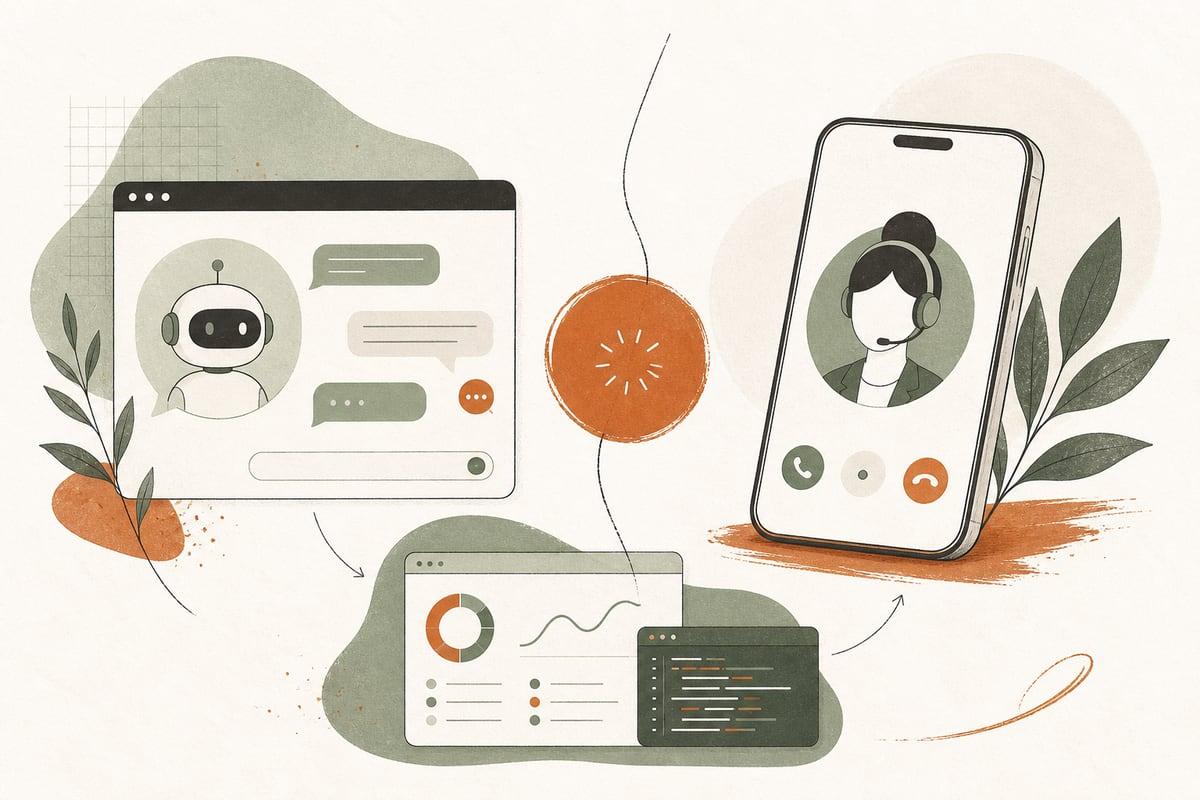
If you want more leads without wasting money on the wrong tool, start with the channel where customers already try to reach you. For some businesses that means a website chatbot; for others, an AI phone receptionist will save more missed opportunities right away.
Why this decision matters
A lot of small-business owners know they should be using AI somewhere, but the options can feel vague. “AI automation” sounds promising, yet it is easy to buy a tool that looks impressive and does very little for actual revenue.
The smarter approach is simple: solve the biggest communication bottleneck first.
If people visit your website but do not call or fill out forms, a chatbot may help. If your office misses calls, sends callers to voicemail, or ties up staff answering repetitive questions, an AI phone receptionist may deliver faster ROI.
The goal is not to add AI for the sake of it. The goal is to make it easier for real customers to reach you, get answers, and take the next step.
The basic difference
Here is the practical distinction:
- A website chatbot helps visitors while they are on your site
- An AI phone receptionist helps callers when they dial your business number
Both can answer common questions, collect lead details, qualify inquiries, and route people to the right next step. But they solve different problems.
A chatbot is best at:
- Engaging visitors who are browsing quietly
- Answering common pre-sale questions
- Guiding people to book, call, or request a quote
- Capturing leads after hours from your website
- Helping visitors find the right page or service quickly
An AI phone receptionist is best at:
- Answering every call, including nights and weekends
- Reducing missed calls when staff are busy
- Handling intake and basic screening
- Routing urgent vs non-urgent callers
- Giving fast answers without putting people on hold
Choose a chatbot first if these signs sound familiar
A website chatbot is usually the better first investment when your website gets traffic, but too few visitors turn into actual inquiries.
Start with a chatbot if:
- You get decent website traffic but not many form submissions
- Visitors often ask the same questions before booking or contacting you
- Your business has services people compare before deciding
- You want to capture after-hours leads from your website
- Many visitors are on mobile and may not want to call right away
- You have a lot of service pages and people need help finding the right one
This is common for:
- Law firms
- Clinics and medical practices
- Contractors
- Local service businesses
- Nonprofits with multiple programs
- Professional service firms
What a chatbot can realistically improve
A good chatbot can reduce friction at the exact moment a visitor is deciding whether to leave or contact you. It can:
- Answer “Do you serve my area?”
- Explain your process
- Collect name, phone, email, and project details
- Offer scheduling links
- Suggest the correct service
- Escalate to a human when needed
The trade-off
A chatbot only helps people who are already on your website. If your biggest problem is missed phone calls, a chatbot will not fix that.
Also, bad chatbots are easy to spot. If it gives vague answers, traps visitors in scripted loops, or cannot hand off to a person, it can hurt trust instead of building it.
Choose an AI phone receptionist first if these signs sound familiar
An AI phone receptionist is often the better first investment when the phone is still a major source of leads and your team cannot answer every call consistently.
Start with an AI phone receptionist if:
- You miss calls during business hours
- Calls go to voicemail after hours
- Staff spend too much time answering repetitive questions
- New leads need basic screening before scheduling
- Your team is interrupted constantly by phone calls
- You rely heavily on inbound calls for new business
- Fast response time matters in your industry
This is especially common for:
- Law offices
- Medical and dental offices
- Home service companies
- Restoration and emergency services
- Contractors
- Local businesses with high call volume
What an AI phone receptionist can realistically improve
A well-configured AI receptionist can:
- Answer every call 24/7
- Greet callers professionally
- Answer common questions
- capture lead information
- Route calls by department or urgency
- Send summaries to your team
- Transfer to a live person when needed
For some businesses, this can immediately reduce lost opportunities, especially if callers usually contact several competitors and hire the first one who responds.
The trade-off
Some callers still prefer a human, especially in sensitive situations. If the call flow is too rigid or the AI sounds unnatural, it may frustrate people.
It also requires clear setup. You need good scripts, routing rules, escalation paths, and an understanding of which questions the AI should and should not answer.
A simple way to decide in 10 minutes
If you are unsure which one to choose first, use this quick checklist.
Pick a chatbot first if most of these are true:
- Your website gets traffic now
- Visitors leave without contacting you
- Most customer questions start online
- Your service requires education before someone is ready to call
- You want to improve website lead capture first
Pick an AI phone receptionist first if most of these are true:
- Calls are a major source of new business
- You miss calls regularly
- Your staff is overloaded on the phone
- Customers expect fast answers by phone
- A missed call often means a lost sale
If both are true
If both lists describe your business, start with the channel causing the bigger revenue leak.
Ask yourself:
- Where are we losing more real opportunities right now?
- Do we have more missed calls or more abandoned website visits?
- Which problem frustrates staff and customers more?
- Which fix is more likely to create immediate operational relief?
That is usually your answer.
ROI: where small businesses often see value first
Buyer-focused decisions should come down to practical return, not hype.
A chatbot often brings better ROI first when:
- You already invest in SEO or ads
- Your website has meaningful visitor volume
- Your forms convert poorly
- Visitors need guidance before they inquire
In that case, a chatbot helps you get more from traffic you already pay for or worked hard to earn.
An AI phone receptionist often brings better ROI first when:
- Your business depends on inbound calls
- Staff cannot keep up with call volume
- After-hours calls matter
- Missing one lead can mean a high-value lost job or case
In that case, the value is often obvious: fewer missed conversations, less admin burden, and better responsiveness.
What to avoid with either option
Whether you choose a chatbot or phone AI, avoid these common mistakes:
1. Automating without a real process
AI works best when your intake process already makes sense. If your workflow is messy, AI may just automate confusion.
2. Giving the AI too much freedom
For local businesses and professional services, accuracy matters. Keep answers grounded in approved information, not improvisation.
3. Forgetting human handoff
People should always have a clear path to a person when needed.
4. Ignoring follow-up
Lead capture is only step one. Make sure messages, transcripts, and call summaries go somewhere your team will actually act on quickly.
5. Treating it as “set it and forget it”
The best results come from reviewing real conversations, tightening scripts, and improving how the system handles objections and edge cases.
A practical rollout plan
If you want to implement the right tool without overcomplicating it, follow this order:
Step 1: Audit your lead flow
Look at the last 30 to 90 days and ask:
- How many leads came by phone?
- How many came through the website?
- Where are people dropping off?
- What questions repeat most often?
- When are leads being missed?
Step 2: Choose one priority channel
Do not launch everything at once. Start with the bigger pain point.
Step 3: Define success clearly
Examples:
- Fewer missed calls
- More qualified website leads
- Faster response times
- Less staff time spent on repetitive questions
- More bookings from existing traffic
Step 4: Build the handoff correctly
Make sure the chatbot or phone system can:
- Notify the right person
- Send clean lead details
- Route urgent cases appropriately
- Escalate when confidence is low
Step 5: Review and improve monthly
Listen to calls. Read chat transcripts. Look for confusion points. Refine the answers and flow.
The bottom line
If your website gets attention but not enough inquiries, start with a chatbot. If your business depends on inbound calls and you miss them, start with an AI phone receptionist.
The best first AI tool is not the one with the most features. It is the one that removes the biggest obstacle between you and your next customer.
Frequently asked questions
Is a chatbot better than a contact form?
Usually, it works best alongside a contact form, not as a total replacement. A chatbot can engage visitors earlier and guide them to the right next step.
Will customers get annoyed by AI answering the phone?
Some will if it is poorly configured. A well-designed system should sound clear, helpful, and make it easy to reach a person when needed.
Can one system handle both chat and phone later?
Yes. Many businesses start with one channel and expand once they know the workflow is working well.
Which is easier to launch?
A simple chatbot can be faster to launch, but either option can be straightforward if your FAQs, intake questions, and routing rules are clear.
How do I know which one is right for my business?
Look at where leads are being lost today: on your website or on your phones. If you want help choosing the best fit, you can book a free consultation at https://webmasterandmore.com/consultation.
Free 2-minute assessment
Where could AI actually save your business time?
Answer a few questions about how you work today and get a personalized report on where AI and automation would pay off first — no email required to see it.
Take the free AI assessmentOr just take one tip a month
A short monthly email with one practical way to make your website work harder. No spam, unsubscribe anytime.