Should You Keep Your Old Website or Redesign It? A Small-Business Guide to Making the Right Call
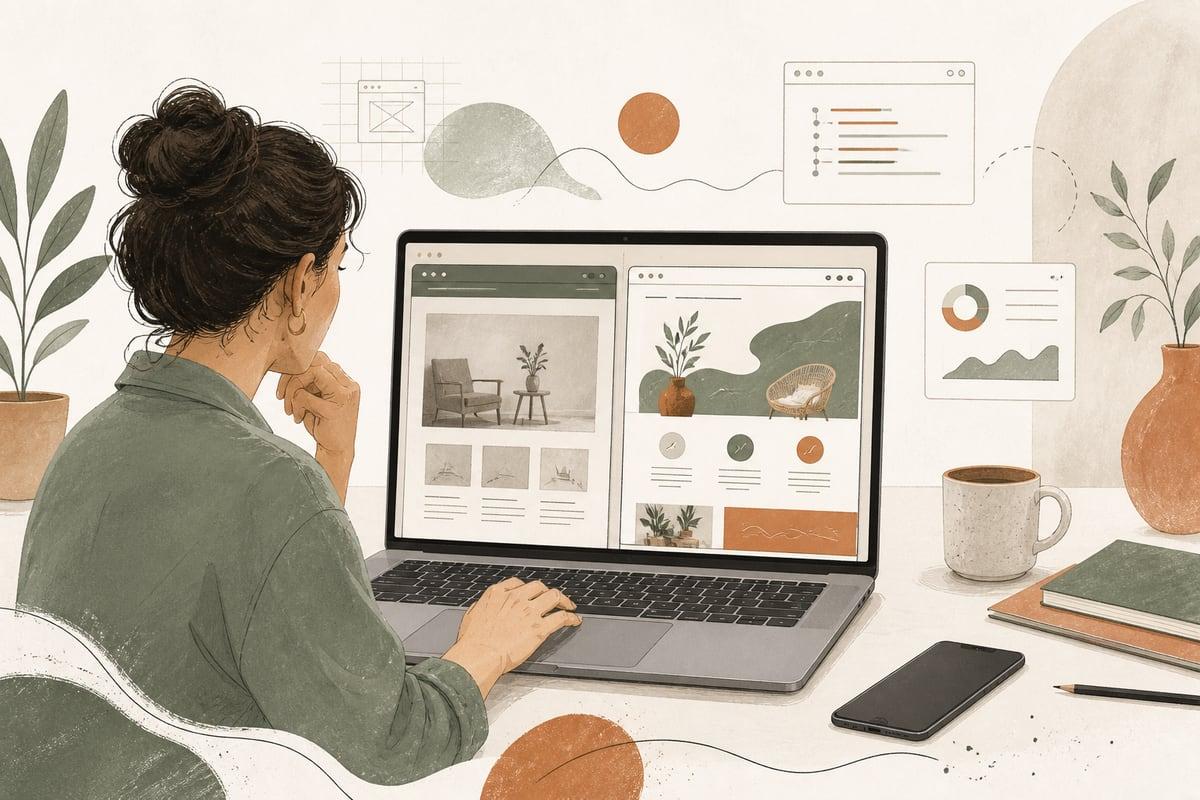
If your website is costing you leads, hard to update, or making your business look behind the times, a redesign may be the right move. But if the structure is still solid, a targeted refresh can often improve results faster and for less money.
Why this decision matters
A lot of small-business owners know something feels off about their website, but they are not sure whether the answer is a full redesign, a partial refresh, or just a few fixes. That uncertainty can lead to two expensive mistakes:
- Rebuilding too early and spending money where it is not needed.
- Waiting too long while a weak website quietly loses calls, form submissions, and trust.
Your website is not just a digital brochure. For many businesses, it is the first sales conversation. If visitors cannot quickly understand what you do, who you help, where you work, and how to contact you, they leave.
The right question is not, “Is my website old?” The better question is, “Is my current website helping me win customers, or getting in the way?”
Signs you may be able to keep your current website
Not every older website needs to be replaced. In some cases, the bones are good, and the site simply needs strategic updates.
You may be able to keep your website if:
- Your pages are bringing in relevant leads
- The site works well on mobile devices
- It loads reasonably fast
- You can update text, photos, and pages without a struggle
- Your service pages already target the right services and locations
- Forms, phone links, and conversion paths work properly
- The design looks a little dated, but not untrustworthy
- There are no major security or plugin issues
In this case, a refresh may be enough. That could include:
- Updating the homepage layout
- Improving calls to action
- Rewriting service-page copy
- Replacing weak photos
- Tightening mobile spacing and buttons
- Improving page speed
- Cleaning up navigation
A good refresh can produce real gains without the cost and disruption of a full rebuild.
Signs a redesign is probably the smarter move
Sometimes patching an old site becomes more expensive than replacing it.
A redesign is often the better choice if:
- Your website looks noticeably outdated or untrustworthy
- It is difficult or risky to update
- The site breaks on mobile devices
- Important pages are buried or confusing
- You have outgrown your current business positioning
- Your platform, theme, or plugin stack is unstable
- The site is slow despite repeated fixes
- SEO structure is weak or inconsistent
- You have added pages over the years without a clear plan
- The site no longer reflects your current services, markets, or quality
For example, a law firm that has added practice areas over time may have a messy navigation and thin pages. A clinic may have confusing appointment paths. A contractor may still be using a generic theme that makes them look like dozens of competitors. In those cases, redesign is not just about looks. It is about making the site easier to trust, easier to navigate, and easier to convert from.
The biggest redesign mistake small businesses make
The most common mistake is focusing on appearance before performance.
A prettier site is not automatically a better site.
If you redesign without addressing the core business questions, you can end up with a modern-looking website that still does not generate leads.
Before deciding on a redesign, make sure you know:
- Which pages get traffic
- Which pages generate leads
- Which services are most profitable
- Which locations matter most
- What questions prospects ask before they call
- Where users drop off or get confused
- What your current website is missing
This is why strategy should come before mockups.
A practical way to decide: keep, refresh, or redesign
Here is a simple framework you can use.
Keep the site and optimize it if:
- It already brings in good leads
- It is technically stable
- It is easy to maintain
- It reflects your current business accurately
- The main issues are copy, offers, or conversion details
Refresh the site if:
- The structure is usable but the design feels dated
- Key pages need stronger messaging
- Mobile usability needs cleanup
- Speed can be improved without rebuilding
- Your calls to action are weak or inconsistent
Redesign the site if:
- Trust is low because the site looks old
- Navigation and page structure confuse visitors
- You cannot easily expand or improve the site
- Technical issues keep coming back
- SEO foundations are poor
- The business has changed significantly since the site was built
Questions to ask before you spend money
Before you approve a redesign, ask these questions:
1. What problem are we solving?
Be specific. “We want something more modern” is not enough.
Better answers include:
- We are getting traffic but not enough calls
- Visitors do not understand our services
- The site is weak on mobile
- We cannot update pages ourselves
- Our site does not support local SEO properly
2. What should stay?
A redesign does not mean throwing everything away. You may already have:
- Valuable service-page content
- Rankings for important keywords
- Strong testimonials
- Useful FAQs
- Good domain authority
Keeping the right assets protects your SEO and saves time.
3. What needs to improve first?
Prioritize improvements tied to revenue and lead quality, such as:
- Clearer service pages
- Better homepage messaging
- Faster mobile load times
- Simpler contact paths
- Stronger trust signals
4. What will success look like?
Define it before the work starts.
Examples:
- More calls from qualified leads
- Better rankings for core services
- Higher form completion rates
- Easier internal updates
- Better performance on mobile devices
What a strong redesign should actually include
If you do move forward with a redesign, it should be more than a new paint job.
A good small-business website redesign should include:
- Clear messaging above the fold
- Service pages built around real buyer questions
- Mobile-first layout and tap-friendly navigation
- Fast load times and clean code
- Strong local SEO foundations
- Obvious calls to action on every important page
- Trust elements like reviews, credentials, and real photos
- A simple content structure that can grow with the business
- Proper technical setup for tracking, forms, and indexing
For WordPress websites, it should also include a plan for:
- Ongoing updates
- Backups
- plugin management
- Security monitoring
- Performance checks
Without that, even a new site can become an old problem quickly.
Trade-offs to be honest about
A redesign can be the right move, but it does come with trade-offs.
Pros
- Better first impressions
- Easier navigation
- Stronger mobile usability
- Better lead flow
- More flexibility for SEO and growth
Cons
- Higher upfront cost than a refresh
- More planning required
- Possible short-term disruption during migration
- Risk of SEO damage if redirects and content migration are handled poorly
That last point matters. If your current site has rankings, a redesign must be managed carefully so you do not lose valuable search visibility.
A quick redesign readiness checklist
If you are unsure whether now is the right time, use this checklist.
You are likely ready for a redesign if you answer yes to several of these:
- My website no longer reflects the quality of my business
- Visitors seem confused about what we do
- The site is weak on phones
- We rarely get leads from pages that should be converting
- It is hard to edit or maintain
- We have technical issues that keep coming back
- Our SEO structure is messy or thin
- The business has changed more than the website has
- We are embarrassed to send people to the site
If only one or two of these apply, a targeted refresh may be enough.
The smartest way to approach this decision
Start with an audit, not a redesign quote.
You want to know what is working, what is broken, what is salvageable, and what is hurting lead generation. That helps you avoid overbuilding and under-fixing.
For many small businesses, the best investment is not automatically “build a brand-new site.” It is making the right level of change based on what will actually improve trust, usability, search visibility, and conversions.
In other words: redesign when the foundation is the problem. Refresh when the foundation is solid but the presentation and performance need work.
Frequently asked questions
How old is too old for a website?
There is no exact age. A five-year-old site can still perform well, while a two-year-old site can already be a problem if it is slow, confusing, or off-brand.
Will a redesign improve SEO automatically?
No. A redesign can help SEO if it improves structure, speed, content, and technical setup. It can also hurt SEO if migration and redirects are handled poorly.
Is a website refresh cheaper than a redesign?
Usually, yes. A refresh is often less expensive because it keeps more of the existing structure. But if the underlying site is unstable, repeated patching may cost more over time.
Should I redesign my website if I am not getting leads?
Maybe, but diagnose the cause first. The issue could be traffic quality, weak messaging, poor calls to action, mobile friction, or weak follow-up — not just design.
Can I keep my WordPress site and still modernize it?
Often, yes. Many WordPress sites can be improved significantly with a better theme setup, custom design work, speed optimization, and cleaner page structure.
If you want an honest second opinion on whether your website needs a refresh or a full redesign, book a free consultation at https://webmasterandmore.com/consultation.
Free 60-second checkup
How healthy is your own website?
Paste your address, get an instant health check — speed, mobile experience, Google visibility, trust, and security. No email required.
Check my website freeOr just take one tip a month
A short monthly email with one practical way to make your website work harder. No spam, unsubscribe anytime.