Should You Add a Website Footer Audit to Your SEO and Conversion Checklist? A Small-Business Guide to Fixing the Most Ignored Section on Your Site
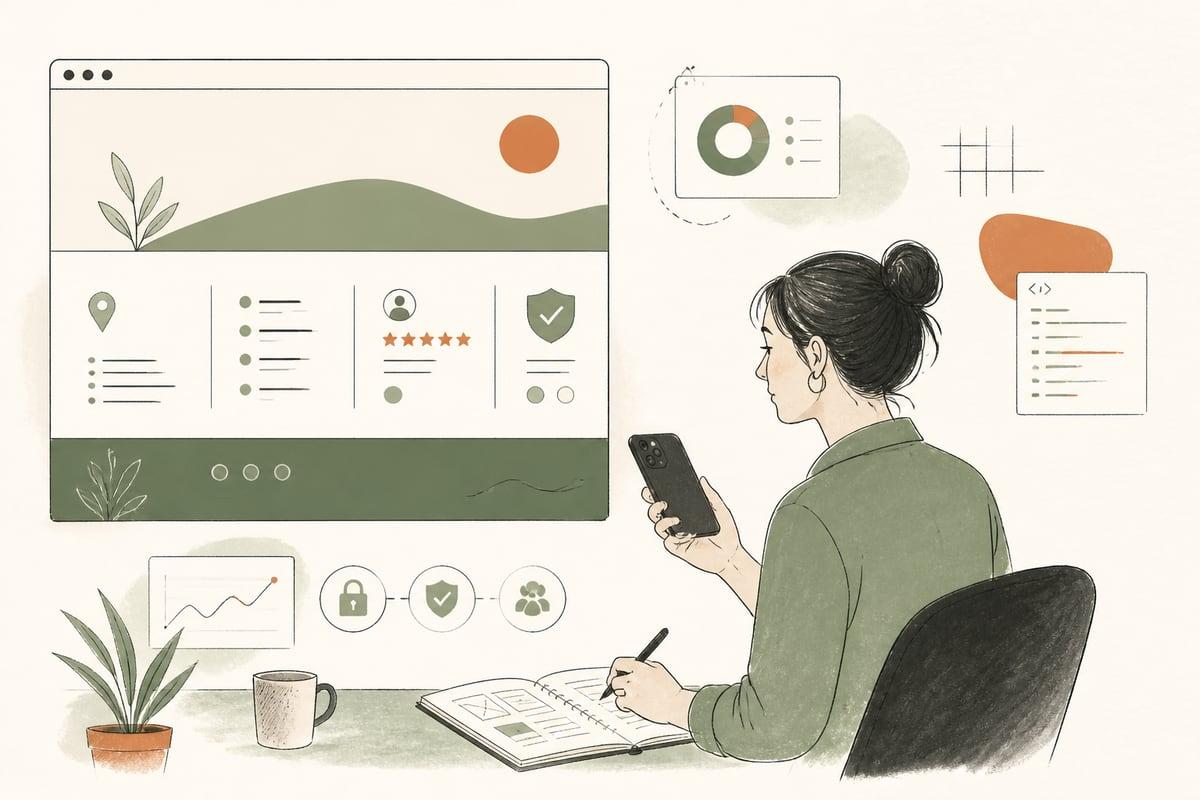
Your website footer is not just a place for copyright text. For many small businesses, it is one of the easiest sections to improve if you want better usability, stronger local trust signals, and more chances to turn visitors into customers.
Why your website footer matters more than most owners think
Most small-business footers are treated like an afterthought. They often contain a logo, a copyright line, and a few random links added years ago. That is a missed opportunity.
A good footer helps with three practical goals:
- It gives visitors a reliable place to find key information on any page.
- It reinforces trust with business details, service coverage, and credibility signals.
- It supports SEO and conversions by improving internal linking and making next steps easier.
People scroll to the footer when they are looking for confirmation. They may already be interested, but they want to verify that you are legitimate, local, reachable, and relevant to what they need.
If your footer is thin, outdated, or generic, you create friction right when a buyer is checking whether to contact you.
What a high-performing small-business website footer should do
Your footer should answer a few silent questions buyers often have:
- Are you a real business?
- Where are you located or what areas do you serve?
- Can I contact you quickly?
- Do you actually offer the service I need?
- Is there proof that other people trust you?
- Where should I go next?
That means your footer should support both user experience and business goals.
For example:
- A law firm footer might reinforce office location, practice areas, consultation options, and bar-related trust signals.
- A contractor footer might show service areas, licensing details, financing link, and fast quote access.
- A clinic footer might highlight phone, hours, patient forms, insurance info, and key treatment pages.
- A nonprofit footer might link to donation, programs, impact, and contact details.
Signs your current footer may be hurting your website
Here are common problems we see on small-business websites:
- Old phone numbers or outdated addresses
- Broken links
- No clear call to action
- No service area or local relevance
- Too many links dumped without structure
- Important pages missing from footer navigation
- Generic text like “Home | About | Services | Contact” and nothing else
- No trust elements at all
- Tiny text or poor mobile layout
- Copyright year is wrong, making the site feel neglected
None of these issues alone will ruin your website. But together they can quietly reduce trust and make your business look less established than it is.
What to include in your footer
You do not need to stuff everything into the footer. You do need to make it useful.
Here is a practical footer checklist for most small-business websites.
1. Clear business identity
Include:
- Business name
- Short one-line description of what you do
- Logo if it helps recognition
Example:
“Family law representation for clients across Los Angeles County”
That short line helps both visitors and search engines understand the business.
2. Accurate contact information
Include the essentials:
- Primary phone number
- Contact page link
- Email if appropriate
- Physical address if you serve customers there
- Office hours if relevant
Make sure phone numbers are clickable on mobile.
3. Service area information
This is especially important for local businesses.
You can list:
- City
- Neighborhoods
- Counties served
- Link to location pages or service area pages
Do not cram in a giant spammy city list. Keep it readable and relevant.
A short line like this is often enough:
“Serving Pasadena, Glendale, Burbank, and surrounding Los Angeles areas.”
4. Key service links
Use your footer to strengthen internal linking.
Link to:
- Top services
n- High-value service categories
- Important location pages
- Booking or consultation page
This helps users find what they need from any page. It can also support crawlability and site structure.
Just be selective. The footer should not become a sitemap dump.
5. Trust signals
Depending on your business, you might include:
- Review platform link
- Association memberships
- Licensing information
- Certifications
- Awards you can verify
- Secure payment mention
- BBB link if active and relevant
Be honest. Only include trust signals you can support.
6. Strong call to action
The footer should not end the conversation. It should continue it.
Examples:
- Schedule a consultation
- Request a quote
- Call now
- Book an appointment
- Start your project
A footer CTA is especially useful for visitors who scroll to the bottom after reading a page.
7. Utility links
These may include:
- Privacy policy
- Terms
- Accessibility statement
- Sitemap
- Patient forms or client portal
- Financing page
- Careers
Not every site needs all of these, but useful utility links can reduce friction.
Footer mistakes to avoid
A better footer is not just about adding more content. It is also about avoiding clutter.
Here are some common mistakes:
Overloading the footer with links
If every page is linked in the footer, visitors stop seeing what matters. Prioritize high-intent destinations.
Hiding key actions in tiny text
If your phone number or consultation link is buried in small print, many visitors will miss it.
Using generic anchor text everywhere
“Click here” and “Learn more” do not help much. Use plain language like “Emergency plumbing services” or “Schedule a consultation.”
Ignoring mobile layout
A footer that looks fine on desktop may become a long, messy wall of text on a phone. Since many local-business visitors are on mobile, that matters.
Letting it go stale
An old footer suggests an old website. Keep it current.
How to audit your footer in 15 minutes
You can review your footer quickly without a full redesign.
Use this checklist:
Step 1: Check accuracy
Verify:
- Phone number
- Address
- hours
- Copyright year
- Main links
Step 2: Check buyer usefulness
Ask:
- If I landed on this page first, would the footer help me trust the business?
- Can I easily contact the company from here?
- Can I find the next page I probably need?
Step 3: Check local relevance
Ask:
- Does this footer show where the business operates?
- Does it support local trust for nearby customers?
Step 4: Check conversion support
Ask:
- Is there a clear CTA?
- Is the CTA visible on mobile?
- Does it match how people usually contact us?
Step 5: Check design and readability
Review:
- Font size
- Spacing
- Contrast
- Tap targets on mobile
- Organization into simple columns or sections
When a footer update can bring real ROI
A footer update will not replace better service pages, faster follow-up, or stronger offers. But it can be a smart low-lift improvement when:
- Your site gets traffic but some visitors hesitate to contact you
- Your business has changed locations, services, or service areas
- You have never intentionally structured footer links
- Your website feels thin or outdated
- Mobile users need easier access to call, book, or request help
This is one of those website improvements that is usually affordable, quick to implement, and useful across the whole site.
Because the footer appears on nearly every page, one thoughtful update can improve many visitor experiences at once.
A practical footer structure for most small businesses
If you want a simple starting point, this layout works well:
Column 1: Business overview
- Logo
- One-line value proposition
- Short service area line
Column 2: Services
- 4 to 6 top service links
Column 3: Contact
- Phone
- Address
- Hours
- Contact page
Column 4: Trust and next step
- Reviews link or credential
- Primary CTA button
- Privacy/accessibility links below
This structure is easy to scan and works better than a random collection of links.
The bottom line
If your footer has been ignored for years, it is worth fixing. A strong footer can support trust, local SEO, usability, and conversions without requiring a full redesign.
For small-business owners, that makes it one of the simplest website improvements to add to your checklist this quarter.
Frequently asked questions
Does a footer really help SEO?
It can help indirectly by improving internal linking, business clarity, and access to important pages. It will not replace solid content or local SEO work, but it can support both.
How many links should a footer have?
There is no perfect number. Include the most important pages and avoid turning it into a crowded link dump.
Should I put every city I serve in the footer?
Usually no. A short, readable service area summary is better. If you target many locations, link to dedicated location pages instead.
What is the most important footer element for conversions?
Usually a clear contact method and CTA, such as a call button, quote request, or consultation link. What matters most depends on how your customers prefer to reach you.
Should my WordPress footer be custom?
In many cases, yes. A custom footer is easier to tailor to your services, SEO goals, and conversion path than a generic theme footer.
If you want help improving the parts of your website that quietly affect trust, leads, and SEO, you can book a free consultation at https://webmasterandmore.com/consultation.
Free 60-second checkup
How healthy is your own website?
Paste your address, get an instant health check — speed, mobile experience, Google visibility, trust, and security. No email required.
Check my website freeOr just take one tip a month
A short monthly email with one practical way to make your website work harder. No spam, unsubscribe anytime.