Should You Add a Website Conversion Audit Before You Spend on More Traffic? A Small-Business Guide to Fixing the Pages That Should Already Be Producing Leads
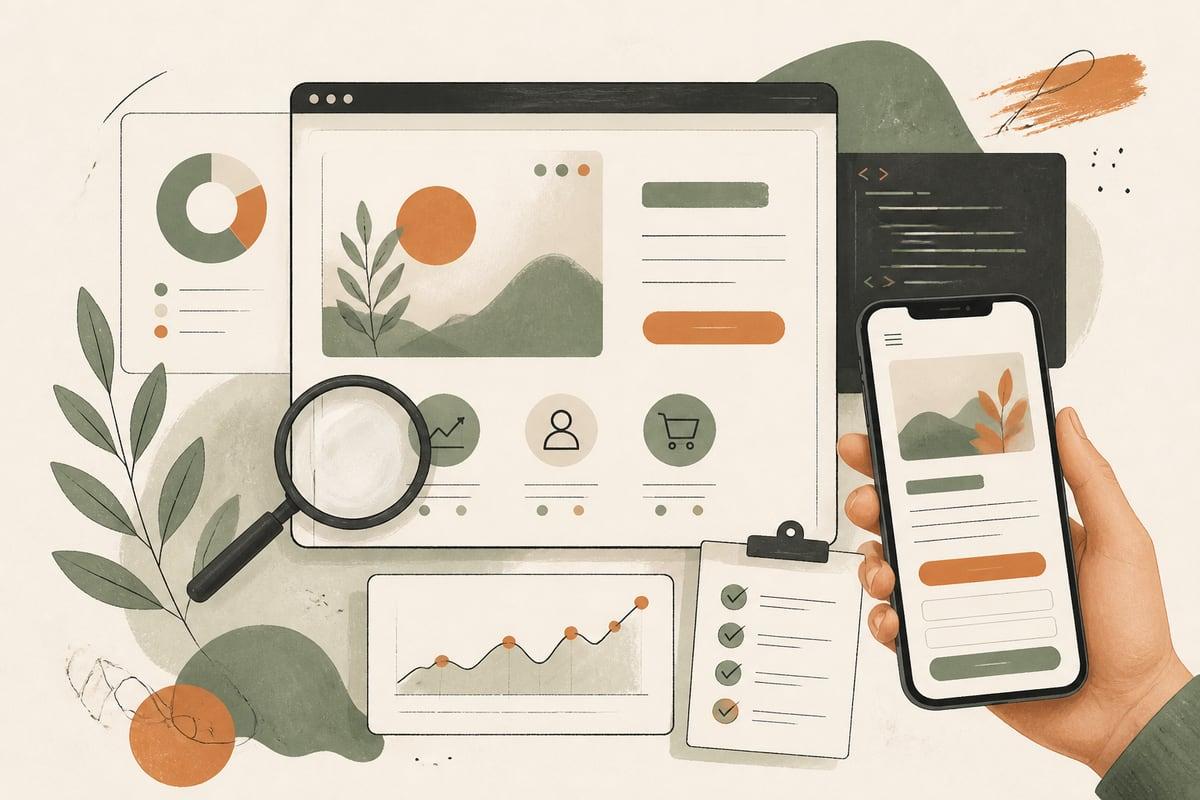
If your website gets some traffic but not enough calls, forms, or bookings, a conversion audit is often the best next step. Before spending more on ads or SEO, make sure your current visitors can quickly understand what you do, trust you, and take action.
What a website conversion audit actually does
A conversion audit looks at how well your website turns visitors into leads. It is not just a design review, and it is not only about Google rankings. It focuses on practical questions like:
- Do visitors immediately understand what you offer?
- Is it obvious who your service is for and where you work?
- Do your pages build enough trust to justify a call or form submission?
- Are contact options easy to find and easy to use?
- Is anything on mobile making people give up?
For most small businesses, the goal is not “more clicks.” The goal is more qualified inquiries from people who are ready to hire someone.
Why this matters before you buy more traffic
Many owners assume the problem is traffic volume. Sometimes that is true. But often, the site is leaking leads.
If a page is unclear, slow, hard to use on mobile, or missing trust signals, sending more visitors to it can just increase waste. You may pay for more ad clicks, invest in SEO content, or spend time on social media, only to push people into the same weak conversion path.
A conversion audit helps you answer a simple business question: should you spend your next dollar on attracting more people, or on helping current visitors convert better?
Signs your website likely needs a conversion audit
You should seriously consider one if:
- Your site gets traffic, but inquiries feel low
- People visit service pages but do not contact you
- Your bounce rate seems high on key pages
- Most leads come from referrals, not the website itself
- Your forms are technically working, but volume is inconsistent
- Mobile traffic is high, but conversions are weak
- You redesigned the site for looks, but results did not improve
- You are about to spend more on ads, SEO, or Local Services Ads
You do not need huge traffic for this to matter. Even modest traffic can reveal whether your pages are helping or hurting sales.
The pages to audit first
Do not start with every page on the site. Start with the pages most likely to influence leads.
1. Homepage
Your homepage should quickly answer:
- What do you do?
- Who do you do it for?
- Where do you serve?
- What should I do next?
If your homepage headline is vague, design-heavy, or focused on clever wording instead of buyer clarity, that is often a problem.
2. Top service pages
These are usually your biggest opportunity. A strong service page should explain:
- The service itself
- The problems it solves
- Who it is right for
- What makes your company trustworthy
- How to take the next step
If service pages are thin, generic, or mostly decorative, visitors may leave to keep researching.
3. Contact page
A contact page should reduce friction, not add it. Check whether:
- The form is short enough
- The phone number is tappable on mobile
- Hours are visible
- The service area is clear
- There is a backup contact option
4. Key landing pages
If you run ads or local SEO campaigns, review the specific pages visitors land on first. Those pages must stand on their own. They should not rely on the visitor digging around the rest of the site to understand your offer.
What to check in a practical conversion audit
Here is a simple checklist small-business owners can use.
Clarity
Ask yourself:
- Can a new visitor understand the offer in 5 seconds?
- Does the page use plain language instead of internal jargon?
- Is the main benefit clear?
- Does the page match what someone searched for?
A visitor should not have to “figure out” your business.
Trust
People contact websites they trust. Check for:
- Real reviews or testimonials
- Licenses, certifications, associations, or awards if relevant
- Photos of your team, office, projects, or work
- Specific service-area information
- Clear business identity and contact details
Trust signals should support the decision without feeling exaggerated or stuffed everywhere.
Calls to action
Many websites have calls to action, but they are weak, hidden, or inconsistent. Review:
- Is the main CTA obvious on every important page?
- Does the CTA match buyer intent, such as call, request a quote, or book a consultation?
- Are there too many competing actions?
- Is the next step low-friction?
A contractor may need “Request an Estimate.” A law firm may need “Schedule a Consultation.” A clinic may need “Call to Book.” The right CTA depends on how your buyers decide.
Forms
Forms are a frequent source of lost leads. Check:
- How many required fields are there?
- Do you ask for information you do not truly need yet?
- Is the form easy on mobile?
- Does the page explain what happens after submission?
- Do submissions go to the right person reliably?
Long forms can improve lead quality in some cases, but they can also suppress volume. The right balance depends on your sales process.
Mobile usability
A site can look fine on desktop and still lose leads on phones. Review:
- Button size and spacing
- Font readability
- Sticky headers taking too much space
- Pop-ups blocking content
- Tap-to-call visibility
- Form usability on small screens
For many local businesses, mobile is where the conversion decision happens.
Speed and technical friction
Even a persuasive page can underperform if it loads poorly. Check for:
- Slow-loading hero images
- Heavy scripts and widgets
- Broken buttons or forms
- Pages shifting while loading
- Clickable elements too close together on mobile
Speed is not just an SEO issue. It affects whether real people stay long enough to contact you.
Common conversion problems small businesses overlook
Some of the biggest issues are simple.
Weak headlines
If your headline says something broad like “Quality You Can Trust,” it is not doing enough. Visitors need immediate clarity, not slogans.
Generic stock imagery
Stock photos are not always bad, but if every page looks generic, trust can drop. Real photos often help buyers feel they are dealing with a legitimate local business.
No visible next step
Sometimes a page has good information but no strong action path. The visitor agrees you seem credible, but does not know what to do next.
Too much text before the CTA
Detailed content can help SEO and trust, but important actions should not be buried. Give visitors a chance to contact you before they scroll forever.
Mismatch between traffic source and page
If someone clicks an ad for one service and lands on a general page, conversions often suffer. Relevance matters.
How to decide what to fix first
Do not try to fix everything at once. Prioritize changes based on business impact.
Start here:
- Fix broken or unreliable contact paths
- Improve clarity on homepage and top service pages
- Strengthen calls to action
- Reduce form friction
- Improve mobile usability
- Address obvious speed issues
- Add stronger trust signals
This order usually makes sense because there is no point polishing design details if the site still confuses visitors or drops submissions.
When a conversion audit beats a redesign
A lot of owners assume poor performance means they need a full redesign. Sometimes they do. But often, the better move is targeted improvement.
A conversion audit is especially useful when:
- Your branding is acceptable but pages underperform
- Your site structure is workable
- The content is mostly there, but the messaging is weak
- The main issues are forms, CTAs, trust, mobile friction, or speed
A redesign makes more sense when the site is outdated at a structural level, hard to update, broken across devices, or built on a messy foundation.
A simple way to run your own first-pass audit
Here is a practical process:
- Open your homepage and top 3 service pages on your phone
- Set a timer for 10 seconds per page
- Ask: what does this company do, who is it for, and what should I do next?
- Try calling, filling out a form, and tapping important buttons
- Look for anything confusing, slow, or annoying
- Ask someone outside your company to do the same test
- Review your lead flow after submission to make sure nothing disappears
This quick exercise will not replace a professional audit, but it often exposes major friction fast.
The business payoff
A website conversion audit helps you get more value from traffic you already have. That can mean better ROI from SEO, ads, referrals, local listings, and offline marketing.
The real win is not just a prettier website. It is a clearer path from visitor to customer.
Frequently asked questions
How is a conversion audit different from an SEO audit?
An SEO audit focuses on visibility and rankings. A conversion audit focuses on what happens after people arrive and whether they actually contact you.
Can a small business do a conversion audit without special tools?
Yes. You can catch many issues with a manual review of your key pages, forms, mobile experience, and calls to action. Tools help, but they are not required to spot obvious friction.
Should I run a conversion audit before a redesign?
Usually yes. It helps you avoid rebuilding the same problems into a new site and clarifies what actually needs to improve.
What if my website has low traffic and low conversions?
You may need both better traffic and better conversion performance. But even with lower traffic, a conversion audit can help make sure future visitors are more likely to turn into leads.
How often should I review website conversion issues?
At minimum, review key pages quarterly and any time you launch new services, redesign pages, or start a new marketing campaign.
If you want a second set of eyes on your website, you can book a free consultation at https://webmasterandmore.com/consultation. We can help you spot the friction, prioritize fixes, and turn more of your existing traffic into real leads.
Free 60-second checkup
How healthy is your own website?
Paste your address, get an instant health check — speed, mobile experience, Google visibility, trust, and security. No email required.
Check my website freeOr just take one tip a month
A short monthly email with one practical way to make your website work harder. No spam, unsubscribe anytime.